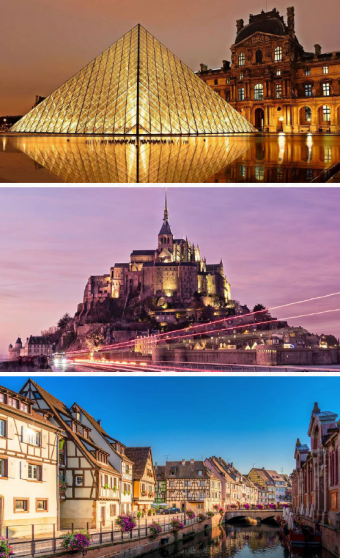
France travel gruise for Australians
By Christian Blondeau – Founding Director of France at Leisure, and your expert on France.
Your guide to planning an unforgettable holiday in France

France has a way of rewarding travellers who slow down, look beyond the obvious and allow themselves time to experience the country properly.
For Australian travellers, France offers an extraordinary combination of history, culture, food and wine, beautiful landscapes, sophisticated cities, charming villages and unforgettable experiences. From the streets of Paris to the lavender fields of Provence, the vineyards of Bordeaux and Burgundy, the beaches of the French Riviera and the historic villages of Normandy, there is a very different France waiting to be discovered.
At France At Leisure, we believe the best French holidays aren't simply about ticking off famous sights, especially for first-timers. They are about choosing the right places, staying in the right locations, travelling at the right pace and discovering experiences that match your interests.
With more than 23 years of experience and deep personal connections with France, we help Australian travellers experience France with confidence and discover places they might otherwise miss.
Why France is such a wonderful destination for Australians
France is one of Europe's most diverse countries, which makes it possible to create completely different holidays depending on your interests.
You might spend a few days exploring Paris before travelling south to Provence for markets, villages and wine. Perhaps you'd prefer a leisurely journey through Burgundy, a road trip through the Dordogne, a gastronomic escape to Lyon or Bordeaux, or time beside the Mediterranean on the French Riviera.
France also works exceptionally well for Australian travellers because you can combine several very different experiences within one trip.
A two- or three-week holiday might include:
- Paris → Loire Valley → Bordeaux → Dordogne
- or: Paris → Normandy → Brittany → Loire Valley
- or: Paris → Burgundy → Provence → French Riviera
The key is not trying to see everything. The key is choosing the right France for you.
When is the best time to visit France?
There is no single best time to visit France. The ideal month depends on where you want to go and what you want to experience.
Spring — March to May
- Spring is a beautiful time to visit France, with gardens and countryside coming alive and generally comfortable conditions for sightseeing.
- Paris is particularly enjoyable in spring, while the warmer southern regions begin to emerge from winter.
- Spring can be an excellent choice for travellers who want to explore cities, gardens, food and culture without the intensity of the European summer.
Summer — June to August
- Summer brings long days, outdoor dining, festivals and a lively atmosphere throughout France.
- Provence is particularly appealing, with its landscapes, villages and famous lavender-growing areas. The French Riviera is at its most vibrant, while the Atlantic and Mediterranean coasts become popular summer destinations.
- Summer is also the busiest period, so popular hotels and experiences should be planned well in advance.
Autumn — September to November
- For many experienced travellers, autumn is one of the most rewarding times to visit France.
- September can bring warm days and a more relaxed atmosphere after the peak summer period. Wine regions take on particular interest during the harvest season, while October brings beautiful autumn colours to many parts of the country.
Winter — December to February
- Winter offers a completely different France.
- Paris takes on a special atmosphere, Christmas markets appear in many regions but especially in Alsace, and the French Alps become a destination for skiing and winter experiences.
- The south of France can also be rewarding in winter for travellers looking for a quieter experience.
- Our advice: don't choose your travel dates simply because someone says one month is the "best" month for France. Choose the season that suits the experience you want.
How long should Australians spend in France?
- This is one of the most important questions we receive.
- Because Australia is such a long way from France, we generally encourage travellers to allow enough time to overcome jet lag and enjoy France at a comfortable pace.
One week in France
A week is enough for a wonderful introduction, particularly if you concentrate on Paris and perhaps one nearby region.
10–14 days
Two weeks gives you much more flexibility.
You could combine Paris with one or two regions, such as:
- Paris + Normandy
- Paris + Loire Valley
- Paris + Burgundy
- Paris + Provence
Three weeks or more
- With three weeks, you can begin to experience France rather than simply visit it.
- You might combine Paris with several regions and travel by train, private transfer, car or a combination of transport.
- For Australian travellers making the long journey to Europe, three weeks can be an excellent amount of time for a more immersive French holiday.
Where should Australians go in France?
France has an extraordinary variety of regions. The right destination depends on what you enjoy.
Paris
- Paris deserves time. Perhaps 5 to 7 nights.
- Yes, you should see the Eiffel Tower, Louvre, Notre-Dame, Arc de Triomphe and other famous landmarks. But Paris is also about its neighbourhoods, cafés, markets, gardens, museums, restaurants and the simple pleasure of walking through the city.
- Paris can easily form the beginning or end of a longer French itinerary.
- Rather than rushing through the major sights, allow yourself time to experience the city at street level.
*** CHRISTIAN’S PERSONAL RECOMMENDATIONS:
- **For families, I always recommend staying in an apartment rather than a traditional hotel.** Having a separate living space, kitchen, and additional room to spread out makes a longer stay in Paris considerably more comfortable and flexible, particularly when travelling with children. It also gives you the option of enjoying a relaxed breakfast at home or picking up fresh produce and local specialties from one of the city’s excellent markets and food shops.
- **For exploring Paris, Le Marais is one of my favourite neighbourhoods, particularly during the day.** Its beautiful historic streets, elegant architecture, independent boutiques, galleries, cafés, and lively atmosphere make it an enjoyable area to explore on foot. It is also well positioned for visiting many of the city’s major sights and can be a particularly convenient base for families who prefer to combine sightseeing with plenty of time to wander and stop for refreshments.
- **To make the most of your time in Paris, I recommend planning your transport and sightseeing passes in advance.** Depending on the length of your stay and the museums and attractions you wish to visit, a multi-day public transport pass combined with an appropriate museum or attraction pass can be a practical and cost-effective option. These passes can reduce the need to purchase individual tickets and, where applicable, provide easier access to included attractions.
- **A little planning will make a big difference in Paris.** I recommend grouping visits by neighbourhood rather than crossing the city repeatedly, allowing plenty of time for walking and spontaneous discoveries. For families, it is also worth building in regular breaks at cafés, gardens, or parks rather than trying to see too much in a single day. Paris is best enjoyed at a relaxed pace, with a balance of major landmarks and time simply wandering the city’s beautiful streets.
Provence
- Provence is one of France's most evocative regions.
- Think hilltop villages, markets, vineyards, olive groves, Mediterranean landscapes, historic towns and the scent of lavender in summer.
- Places such as Aix-en-Provence, Avignon, Arles, the Luberon and the Alpilles can be combined into a wonderfully relaxed journey.
- Provence is particularly well suited to travellers who enjoy food, wine, scenery, art, history and village life.
- The region can also be explored throughout the year, rather than being purely a summer destination.
*** CHRISTIAN’S PERSONAL RECOMMENDATIONS:
- **Aix-en-Provence is perhaps one of the most authentic and charming medium-sized cities in Provence**, offering a wonderful blend of historic character, elegant architecture, lively cafés, markets, and a relaxed Provençal atmosphere. Its tree-lined Cours Mirabeau, beautiful old town, and vibrant cultural scene make it an ideal place to experience the essence of Provence at a leisurely pace.
- **For a taste of the Luberon, some of my favourite towns and villages are L’Isle-sur-la-Sorgue, Gordes, Bonnieux, and Roussillon.** Each has its own distinctive character, from the canals, antique shops, and lively markets of L’Isle-sur-la-Sorgue to the dramatic hilltop setting of Gordes. Bonnieux offers beautiful views across the Luberon countryside, while Roussillon is famous for its striking ochre-coloured cliffs, buildings, and surrounding landscapes. The villages are best enjoyed without rushing, allowing time to wander the picturesque streets, browse local boutiques, and stop for lunch or a coffee along the way.
- **A visit to Cassis on the Mediterranean coast is an absolute must**, particularly for its beautiful harbour, colourful waterfront, and dramatic setting between the sea and surrounding cliffs. I would highly recommend combining your visit with a few hours’ boat cruise through the **Calanques**, the spectacular limestone inlets and turquoise waters that stretch along this magnificent coastline. It is a wonderful way to appreciate the natural beauty of the region from the water and makes for a memorable day on the Côte d’Azur.
The French Riviera
- The Côte d'Azur combines the Mediterranean with some of France's most glamorous and historic towns.
- Nice is an excellent base, while Cannes, Antibes, Menton and Saint-Paul-de-Vence offer very different experiences.
- The region can be about beaches and sunshine, but it can also be about art, architecture, food, markets and the spectacular scenery of the hinterland.
- For Australian travellers who enjoy combining France with the Mediterranean lifestyle, the Riviera can be an excellent choice.
*** CHRISTIAN’S PERSONAL RECOMMENDATIONS:
- Staying in Nice is perhaps the most practical and convenient base for exploring the French Riviera, offering easy access to many of the region’s highlights while providing a vibrant atmosphere, excellent restaurants, and beautiful seaside promenades. From Nice, it is easy to explore the surrounding coastal towns and villages by car, train, or organised excursion.
- A full day exploring Monaco is highly recommended, ideally combined with a visit to the picturesque medieval village of Èze. Perched dramatically on a hill overlooking the Mediterranean, Èze is renowned for its charming, narrow cobblestone lanes, stone buildings, artisan boutiques, and spectacular panoramic sea views. After exploring Èze, continue to Monaco to experience the glamour of Monte Carlo, stroll around the elegant harbour, and discover the historic old town and Prince’s Palace. The combination of Èze and Monaco makes for a memorable day showcasing both the authentic charm and sophisticated character of the French Riviera.
Burgundy

- Burgundy is parA Dayarly appealing to travellers who appreciate wine, gastronomy, history and beautiful countryside.
- The region offers an opportunity to slow down and explore vineyards, historic towns, markets and villages.
- It can also be an excellent alternative to some of France's more heavily visited destinations.
*** CHRISTIAN’S PERSONAL RECOMMENDATIONS:
- **Staying in the charming town of Beaune is my recommendation, as it is ideally located in the heart of Burgundy and offers so much more than its world-renowned wines.**
- **Beyond wine tasting, there are plenty of wonderful ways to experience the region.** You can enjoy a leisurely self-drive canal cruise, join a guided wine tour, or take advantage of the many outdoor activities on offer, including scenic walking and cycling routes.
- **Burgundy is a wonderful region to explore at a relaxed pace**, with beautiful countryside, charming villages, historic châteaux, and numerous opportunities to discover the region’s rich culture, traditions, and exceptional cuisine.
Bordeaux

- Bordeaux is an obvious choice for wine lovers, but there is much more to the region than wine.
- The city itself is elegant and fascinating, while the surrounding countryside provides opportunities to explore vineyards, châteaux, markets and the Atlantic coast.
- Bordeaux can also work beautifully as part of a longer itinerary through south-west France.
*** CHRISTIAN’S PERSONAL RECOMMENDATIONS:
- **I highly recommend staying in the charming town of Beaune, ideally situated in the heart of Burgundy.** While the region is world-renowned for its exceptional wines, Burgundy has so much more to offer, from its beautiful countryside and historic villages to its rich cultural heritage and outstanding cuisine.
- **There are plenty of wonderful ways to experience the region.** Enjoy a leisurely self-drive canal cruise, join a guided wine tour, or make the most of the many outdoor activities on offer, including scenic walking and cycling routes through the vineyards and surrounding countryside.
- **Burgundy is best explored at a relaxed pace**, allowing you to appreciate its picturesque scenery, charming villages, elegant châteaux, and distinctive local character. It is a wonderful destination for immersing yourself in the region’s culture, traditions, and renowned gastronomic heritage.
Normandy

- Normandy offers a fascinating combination of history, coastline, countryside, food and architecture.
- For many Australians, the D-Day beaches and associated memorials are an important reason to visit.
- But Normandy is much more than its wartime history.
- Mont-Saint-Michel, historic towns, coastal landscapes, cider, seafood and local produce provide plenty of reasons to spend several days exploring the region.
*** CHRISTIAN’S PERSONAL RECOMMENDATIONS:
- Staying in Saint-Malo for one night should be sufficient to experience the highlights of this beautiful part of Brittany. The historic walled city is a wonderful place to explore, with its impressive ramparts, narrow cobbled streets, charming old town and beautiful coastline.
- You can easily visit the elegant seaside resort of Dinard, famous Belle Époque villas and coastal walking paths. It is also worth allowing time to explore Dinan, one of Brittany’s most picturesque medieval towns.
Of course, no visit to this region would be complete without spending at least half a day at Mont Saint-Michel. This extraordinary medieval abbey, dramatically situated on a rocky island surrounded by the bay, is one of France’s most iconic landmarks.
Loire Valley

The Loire Valley is famous for its magnificent châteaux and gardens.
It can be an excellent choice for travellers who enjoy:
- French history
- architecture
- gardens
- wine
- cycling
- countryside
- elegant château accommodation
Its location also makes it relatively easy to combine with Paris.
*** CHRISTIAN’S PERSONAL RECOMMENDATIONS:
- Staying in Amboise is my recommendation rather than staying in Tours or another larger town, as it provides an ideal base for exploring the Loire Valley. Amboise is conveniently located close to many of the region’s most famous châteaux and gardens, including Château de Chenonceau, Château de Chambord and Château de Villandry. The town itself is also charming and picturesque, with lovely streets, riverside views, cafés and restaurants, making it a wonderful place to relax at the end of the day.
- I would stay in the region for 5 to 7 nights.
- Cycling and walking are very popular activities in the Loire Valley, thanks to the relatively flat terrain and extensive network of scenic routes. There are many dedicated cycling paths and quiet country roads that pass through vineyards, forests, villages and along the Loire River.·
Dordogne
- The Dordogne is ideal for travellers looking for a slower, more rural side of France.
- Here you can discover medieval villages, castles, rivers, markets, caves and outstanding local cuisine.
- A car is particularly useful for exploring this part of France at your own pace.
*** CHRISTIAN’S PERSONAL RECOMMENDATIONS:
- Staying in the town of Sarlat-la-Canéda, in the heart of the Black Périgord, is my preference. This beautifully preserved medieval town feels like stepping back several centuries, with its narrow cobbled streets, golden stone buildings, historic squares and charming atmosphere. It is also an excellent base from which to explore the surrounding Dordogne countryside.
I would stay at least 7 nights there.
- The Black Périgord is renowned for its exceptional gastronomy, particularly its famous foie gras, truffles, walnuts, local cheeses and traditional Périgord cuisine. There are also plenty of opportunities for outdoor activities, including walking.
Travelling around France
One of the great advantages of travelling in France is the variety of transport options.
By train
- France has an extensive rail network, including high-speed TGV services.
- Paris connects efficiently with many major cities and regions, making rail travel an excellent option for parts of a French itinerary. Official French tourism information notes that destinations such as Bordeaux, Lyon, Marseille and Strasbourg can be reached from Paris by train in around two to three hours.
By car
- A car becomes much more valuable when you leave the major cities.
- For exploring villages, vineyards and countryside — particularly in areas such as Provence, Dordogne and parts of the Loire Valley — driving gives you much greater flexibility.
- The best itinerary may therefore combine both:
Train for major city-to-city journeys + car for regional exploration.
*** CHRISTIAN’S PERSONAL RECOMMENDATIONS:
- If you are travelling in France or Europe for **more than three weeks**, leasing a car can be a more economical option than traditional car rental, particularly for longer stays.
- A European car lease also offers several additional advantages. You will receive a **brand-new vehicle**, fully insured with **no excess**, giving you greater peace of mind throughout your journey. Unlike a standard rental, the vehicle is provided specifically for your trip, making it an attractive option for extended European travel.
- You can also drive the vehicle across more than 25 European countries, allowing you to travel freely across borders and explore multiple destinations at your own pace.
- For more details, **click here** to learn about the benefits of this unique program.
How much does a holiday in France cost?
There is no single answer, as France can accommodate a wide range of travel styles and budgets. However, according to a study by the French Tourist Bureau, the average Australian traveller spends approximately $280 per day while travelling in France.Your overall budget will depend on:
- accommodation
- time of year
- transport
- restaurants
- private guides - tours and experiences
Rather than trying to create the cheapest possible itinerary, we believe Australian travellers should focus on value and suitability.
A beautiful three-week itinerary with fewer hotel changes can often be more enjoyable than trying to fit twice as many destinations into the same period.
How to experience the "real" France
The France most travellers remember is often found away from the major attractions.
Consider:
- Staying in a small French town rather than always staying in a major city.
- Visiting a local market.
- Having lunch in a village.
- Meeting with locals such as a winemaker, farmer and others.
- Exploring a region with a local guide.
- You will do more by driving rather than by train
- Staying in a historic property.
- Spending several nights in one location rather than changing hotels every day.
This is the type of travel we specialise in at France At Leisure.
Currency
France uses the euro (€).
Australian travellers should check their bank's international transaction and ATM fees before travelling.
*** CHRISTIAN’S PERSONAL RECOMMENDATIONS:
- **When I travel overseas, I use a WISE Card for its convenience and flexibility when making payments or withdrawing cash.** One of the advantages is that you can exchange your Australian dollars into euros before your trip, allowing you to lock in an exchange rate that you are comfortable with rather than waiting until you arrive.
**Some of the key advantages of using a Wise card include:**
- **Competitive exchange rates:** Wise generally uses the mid-market exchange rate when converting currencies, with a transparent conversion fee.
- **Multi-currency convenience:
- **Exchange currency in advance:** You can purchase euros before your trip when the exchange rate is favourable and then use your euro balance while travelling.
- **Easy card payments:** The card can be used widely for everyday purchases such as restaurants, accommodation, shopping, transport, and sightseeing.
**A practical tip is to always carry a small amount of cash as a backup**, particularly for smaller cafés, markets, local shops, or places where card payments may not be available. **Before travelling, it is worth checking the current Wise fees, ATM withdrawal allowances, and terms that apply to your particular account**, as these can change over time.
Electrical power
France uses European-style electrical outlets. Australian travellers will generally need an appropriate travel adaptor.
Travel documents
- Always check the current entry and visa requirements before travelling.
- Visa requirements depend on your nationality, passport and circumstances. Australians should check the official French visa information before departure rather than relying on an old travel article. The official France-Visas service provides information specifically for applicants in Australia.
*** CHRISTIAN’S PERSONAL RECOMMENDATIONS:
- **If you plan to rent or lease a car while overseas, I recommend obtaining an International Driving Permit (IDP) before you leave Australia.** An IDP is a recognised translation of your Australian driver’s licence and can make the car-hire process much easier, particularly if you are travelling through several countries.
- **It is important to arrange this before your departure**, as you may need to present both your Australian driver’s licence and the IDP when collecting the vehicle. Check the requirements of the countries you plan to visit, as regulations can vary, and some car-hire companies may have their own requirements.
How to plan your first trip to France
If this is your first French holiday, we recommend starting with three questions:
1. What do you love?
Do you prefer:
- Food and wine?
- History?
- Art?
- Villages?
- Beaches?
- Shopping?
- Gardens?
- Walking?
- Luxury?
- Family travel?
2. How do you like to travel?
Would you rather:
- Have everything organised?
- Travel independently?
- Join a small group?
- Take a private tour?
- Drive yourself?
- Travel by train?
3. How much time do you have?
- Your available time should determine your itinerary — not the other way around.
- A common mistake is trying to fit too much into a two-week holiday.
- France is best experienced when you have time to stop, explore and enjoy your surroundings.
Sample France itineraries for Australians
These are starting points rather than fixed itineraries.
10 days — Paris & Provence
- Paris — 4 nights
- Avignon/Aix-en-Provence — 3 nights
- Luberon/Alpilles — 3 nights
- Ideal for first-time visitors wanting a combination of city, culture, food and southern France.
14 days — Paris, Normandy & Loire Valley
- Paris — 4 nights
- Normandy — 4 nights
- Loire Valley — 3 nights
- Paris — 3 nights
Ideal for history, architecture, gardens and French countryside.
18–21 days — The Classic French Journey
- Paris
- → Burgundy
- → Provence
- → French Riviera
This itinerary allows you to experience several distinct regions without trying to see the entire country.
21+ days — Slow France
- Paris
- → Loire Valley
- → Dordogne
- → Bordeaux
- → Provence
A longer itinerary gives you the luxury of travelling more slowly and spending several nights in each destination.
Why use a France travel specialist?
- Planning a French holiday yourself can be rewarding, but France is a large and surprisingly complex country.
- The challenge isn't finding somewhere to go.
- The challenge is knowing where you should go.
A France specialist can help you understand:
- which regions suit your interests
- how long to stay
- which destinations work well together
- when to visit
- whether to travel by train or car
- which hotels are right for you
- which experiences are genuinely worthwhile
- where to avoid unnecessary travel time
- how to combine famous sights with lesser-known places
At France At Leisure, our role is to take your interests and create a French journey around them.
Why choose France At Leisure?
France At Leisure was created for Australian travellers who want to experience France in a more personal and meaningful way.
With more than 23 years of experience, French-born expertise and trusted relationships with local partners, we bring together our knowledge of France and our understanding of Australian travellers.
We can help create:
- Tailor-made France holidays
- Private experiences
- Small-group tours
- Self-drive journeys
- Luxury stays
- Food and wine experiences
- Barge and canal cruises
- Multi-region French itineraries
Our goal is simple:
- To help you discover France the way we know it.
- Not simply the France of the guidebooks.
- Your France.
Ready to discover France?
Whether you are planning your first visit to France or returning to discover a different side of the country, we would love to help.
Tell us what you enjoy, how you like to travel and how much time you have.
We'll use our knowledge of France to create a journey that is personal, practical and memorable.
Start planning your French holiday with France At Leisure.